Top Cities to Experience Navratri Pooja in India: A Comprehensive Research Based Guide
Introduction to Navratri: India's Nine-Night Festival of Divine Femininity
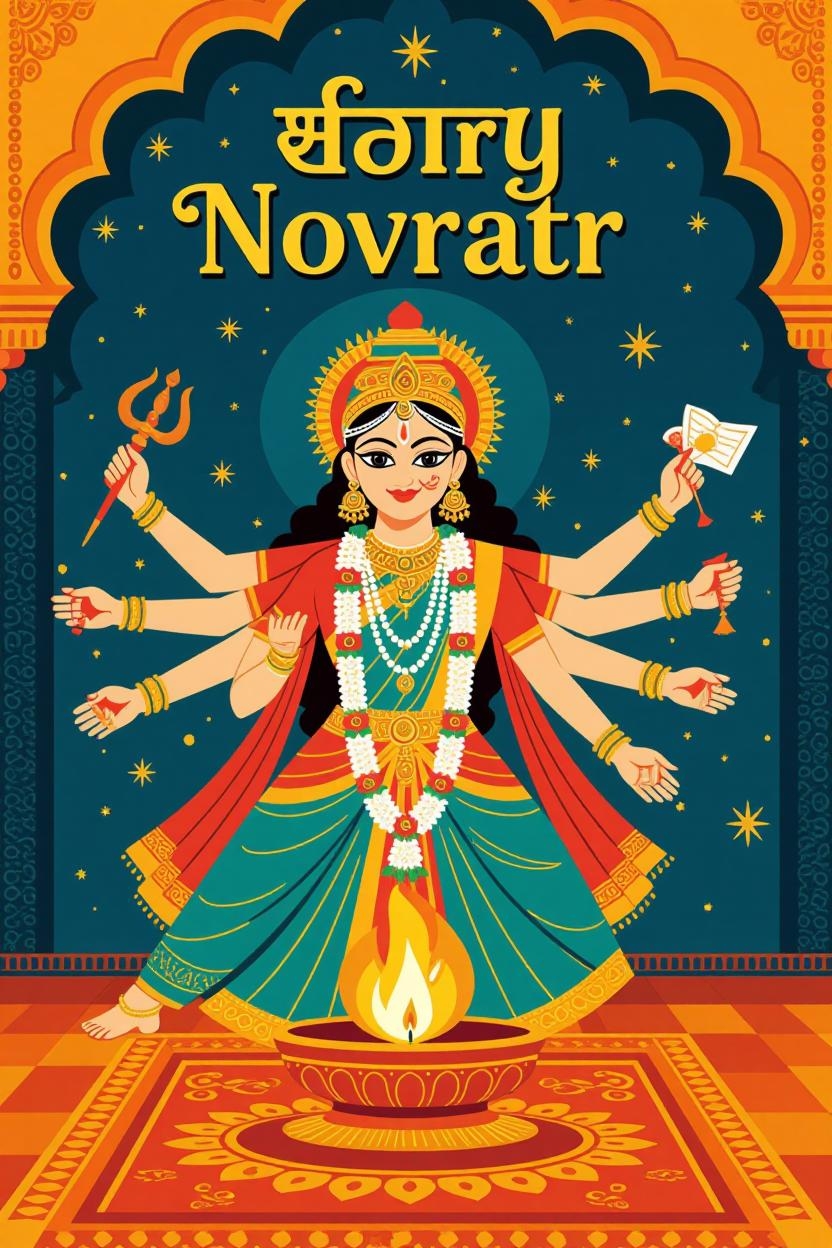
Navratri, derived from the Sanskrit words "nava" (nine) and "ratri" (nights), represents one of India's most significant Hindu festivals dedicated to the worship of Goddess Durga in her nine divine forms. This festival symbolizes the victory of good over evil, specifically commemorating Durga's triumph over the demon Mahishasura. Across India's diverse cultural landscape, Navratri manifests in multifarious celebrations that reflect regional traditions, historical influences, and local customs. The festival occurs twice annually, Chaitra Navratri in March-April and Sharad Navratri in September-October, with the latter being more widely celebrated throughout the country .
The religious significance of Navratri extends beyond mythological narratives to encompass profound spiritual meanings. According to spiritual leaders, the word "ratri" signifies relief from three types of burdens: physical (adi bhautik), celestial (adi daivik), and spiritual (adi atmik). Thus, the nine nights provide devotees an opportunity for deep rest and rejuvenation through prayer, fasting, and meditation . The festival follows a structured worship pattern: the first three days dedicate to Goddess Durga (destroying impurities), the next three to Lakshmi (bestowing spiritual wealth), and the final three to Saraswati (granting wisdom). This spiritual progression guides devotees from impurity to enlightenment, making Navratri a transformative journey rather than merely a ritualistic observance.
In contemporary India, Navratri has evolved into a major cultural phenomenon that blends religious devotion with artistic expression, community bonding, and economic activity. From the energetic Garba dances of Gujarat to the elaborate pandals of West Bengal, from the traditional Golu displays of South India to the Ram Leela performances of North India, Navratri represents India's cultural diversity while simultaneously highlighting its underlying unity. This thesis article explores the top cities to experience Navratri in 2025, examining their unique traditions, cultural significance, and regional variations that make this festival a pan-Indian celebration with local distinctiveness.
Navratri Celebrations
This research employs a multidimensional framework for evaluating and selecting the top cities for experiencing Navratri in 2025. The evaluation criteria encompass religious significance, cultural richness, historical traditions, tourist accessibility, and unique experiential factors. Data has been gathered from multiple sources including travel guides, cultural websites, governmental tourism resources, and ethnographic accounts to ensure comprehensive coverage of Navratri celebrations across India.
The temporal scope of this study focuses on Sharad Navratri 2025, scheduled from September 22 to October 1, with Vijayadashami/Dussehra on October 2, 2025 . The geographical scope encompasses all Indian states and union territories, with particular emphasis on cities and regions where Navratri celebrations have gained national or international recognition. The selection process prioritized cities that represent diverse regional traditions while offering authentic and immersive experiences for both domestic and international visitors.
For consistency in evaluation, each city has been assessed according to the following parameters:
Religious Significance: Scale and importance of rituals, temple ceremonies, and religious observances
Cultural Programs: Quality and diversity of cultural events including music, dance, and artistic displays
Historical Legacy: Antiquity of traditions and continuity of cultural practices
Tourist Infrastructure: Availability of accommodation, transportation, and visitor services
Unique Experiences: Distinctive elements not found elsewhere in India
Local Participation: Level of community involvement and public engagement
Visual Spectacle: Aesthetic appeal of decorations, illuminations, and installations
This methodology ensures a balanced assessment of each city's offerings while acknowledging the subjective nature of cultural experiences. The following sections present the findings organized by geographical regions, highlighting the top cities within each category.
3 Ahmedabad, Gujarat: The Garba Capital of India
Ahmedabad emerges as the undisputed epicenter of Navratri celebrations in Western India, particularly renowned for its energetic Garba and Dandiya Raas dances. The city transforms into a nocturnal playground during the nine nights of Navratri, with countless venues hosting dance events that continue until dawn. According to cultural historians, Ahmedabad's Garba tradition has evolved from a simple folk dance performed in villages to a sophisticated art form that attracts participants from across the world .
The religious aspects of Ahmedabad's Navratri remain deeply rooted in traditional practices. Each evening begins with the worship of Goddess Durga through the Garba Deep (earthen pot with illuminated lamps) symbolizing the source of life and divine power. Devotees observe fasts during the day and break them after evening aarti, consuming sattvic foods like sabudana khichdi and kuttu puri . The famous Ambaji Temple (one of the 51 Shakti Peethas) located approximately three hours from Ahmedabad attracts thousands of devotees during this period, while local neighborhoods organize community prayers and rituals .
What distinguishes Ahmedabad is the scale and enthusiasm of its dance celebrations. Major venues like GMDC Ground, Rajpath Club, and YMCA Club host gatherings of thousands of participants dressed in traditional attire, colorful chaniya cholis for women and kediyus for men . The United Way Garba in nearby Vadodara represents one of the largest gatherings of its kind in the country, while smaller Sheri Garba (street Garba) events offer more authentic, community-based experiences . The recognition of Garba by UNESCO as an intangible cultural heritage has further elevated Ahmedabad's status as a premier Navratri destination .
Table: Major Garba Venues in Ahmedabad for Navratri 2025
Venue Name Capacity Special Features Target Audience
GMDC Ground 20,000+ Professional performers, celebrity appearances Youth, tourists
Rajpath Club 10,000 Luxury amenities, high-security Elite, corporate
YMCA Club 5,000 Traditional style, family-friendly Families, seniors
CEPT University 8,000 Artistic setting, cultural purism Students, artists
Local Streets Variable Community-based, authentic experience Residents, locals
Beyond the dance events, Ahmedabad offers complete cultural immersion during Navratri. The city's markets brim with festive shoppers purchasing traditional attire, jewelry, and handicrafts. Food stalls specialize in festive delicacies, with special Navratri thalis featuring dishes made from fasting-approved ingredients. The economic impact of Navratri on Ahmedabad is substantial, with hotels premiumly priced and advance bookings essential for visitors . For Navratri 2025, the city anticipates even larger celebrations as tourism rebounds fully post-pandemic, making Ahmedabad an unparalleled destination for experiencing Gujarat's vibrant cultural heritage.
4 Kolkata, West Bengal: The Grandeur of Durga Puja
Kolkata represents the eastern magnum opus of Navratri celebrations, where the festival manifests as Durga Puja, an extravaganza of art, culture, and devotion. Unlike other regions that celebrate all nine nights, Kolkata's primary celebrations occur during the final four days, Saptami, Ashtami, Navami, and Dashami, though preparations begin months in advance . The city transforms into a living art gallery with elaborately themed pandals (temporary structures) housing magnificently crafted idols of Goddess Durga slaying the demon Mahishasura .
The artistic dimension of Kolkata's Durga Puja sets it apart from other Navratri celebrations. Neighborhoods compete to create the most innovative pandals, which range from traditional designs to contemporary interpretations replicating global landmarks or making social statements. The Kumartuli area, where artisans work year-round crafting clay idols, becomes a tourist attraction itself during this period . Cultural programs featuring traditional music (dhak drums), dance performances, and theater productions occur throughout the city, creating a carnival-like atmosphere that engages all senses.
The religious rituals follow precise traditions, beginning with Bodhon (invoking the Goddess) on Mahalaya. The subsequent days feature Pushpanjali (flower offerings), Kumari Puja (worshipping young girls as manifestations of the Goddess), and Sandhi Puja (special worship at the transition between Ashtami and Navami) . The festival culminates in Sindoor Khela on Dashami, where married women smear vermillion on each other before bidding emotional farewell to the Goddess during immersion ceremonies (visarjan) in the Hooghly River .
For visitors in 2025, Kolkata offers multiple experiential dimensions:
Pandal Hopping: Exploring the artistic installations throughout the city, with notable clusters in North Kolkata (Bagbazar, Kumartuli Park) and South Kolkata (Ekdalía Evergreen, Ballygunge Cultural Association)
Culinary Experiences: Sampling traditional Bengali cuisine and special festival foods (bhog) from community kitchens
Cultural Performances: Attending music and dance events showcasing Bengali cultural heritage
Ritual Observation: Witnessing religious ceremonies at famous temples like Dakshineswar Kali Temple and Kalighat Temple
Immersion Ceremonies: Participating in the emotional visarjan processions on Dashami
The economic scale of Kolkata's Durga Puja is staggering, with estimates suggesting expenditures exceeding ₹1,000 crore annually when accounting for decorations, installations, clothing, jewelry, food, and tourism . The festival has transcended its religious origins to become a cultural identifier for Bengal, attracting international attention and significant tourist numbers. For Navratri 2025, Kolkata expects record participation as the pandemic fades, reaffirming its status as India's most artistic Navratri celebration.
5 Varanasi, Uttar Pradesh: Spiritual Navratri Along the Ganges
Varanasi, the world's oldest living city, offers Navratri celebrations characterized by profound spirituality rather than theatrical spectacle. As India's spiritual capital, Varanasi approaches Navratri with devotional intensity expressed through ancient rituals, classical music performances, and sacred ceremonies along the ghats of the Ganges . Unlike the energetic dances of Gujarat or artistic pandals of Bengal, Varanasi's Navratri emphasizes meditation, prayer, and connection with the divine.
The religious practices in Varanasi maintain continuity with centuries-old traditions. Devotees observe fasting, recite the Durga Saptashati (700 verses praising the Goddess), and visit temples dedicated to different manifestations of Shakti . The Durga Kund Mandir, where the Goddess is worshipped as Mahishasura Mardini (slayer of Mahishasura), becomes a focal point for prayers, while the Kashi Vishwanath Temple (dedicated to Shiva) draws thousands of devotees seeking blessings during this auspicious period . The presence of learned priests and Sanskrit scholars makes Varanasi's rituals particularly authentic and spiritually potent.
Each evening during Navratri, the Ganga Aarti at Dashashwamedh Ghat becomes even more spectacular, with priests chanting Vedic hymns and waving large oil lamps in synchronized patterns while devotees float diyas (small lamps) on the river . The combination of fire, water, chantings, and devotion creates a mesmerizing spiritual atmosphere that many visitors describe as transformative. The ghats glow with countless diyas, and the air resonates with devotional songs, creating an ambiance unmatched anywhere else in India.
Varanasi's Navratri celebrations uniquely incorporate the Ram Leela tradition, dramatic enactments of Lord Rama's life from the Hindu epic Ramayana. The Ramnagar Ram Leela, performed since the 19th century, is particularly famous for its traditional style and scale, attracting pilgrims worldwide . During the ten-day performance, the entire town becomes a stage, with different areas representing various locations from the epic. This living tradition adds a dimensional storytelling aspect to Varanasi's Navratri celebrations, connecting the worship of Durga with the narrative of Rama.
For 2025, Varanasi offers visitors a authentic spiritual experience:
Ritual Participation: Joining ancient worship ceremonies rarely seen outside Varanasi
Ganga Aarti: Attending the spectacular evening ceremonies along the ghats
Temple Tours: Visiting sacred sites with expert guides explaining spiritual significance
Classical Music: Experiencing exceptional devotional music performances
Meditation Retreats: Participating in special programs organized during Navratri
The city's tourist infrastructure has improved significantly in recent years, with better hotels, transportation, and visitor services making spiritual tourism more accessible . For those seeking Navratri celebrations emphasizing inner transformation over external spectacle, Varanasi represents India's most authentic and profound destination.
6 Mysore, Karnataka: The Royal Dasara Celebration
Mysore (officially Mysuru) offers Navratri celebrations distinguished by royal grandeur and cultural elegance. The Mysore Dasara, officially recognized as the state festival of Karnataka (Nada Habba), has been celebrated since 1610 under royal patronage . Unlike other regions that focus primarily on religious aspects, Mysore's celebrations combine royal tradition, cultural performances, and public processions that create a regal Navratri experience.
The defining feature of Mysore Dasara is the magnificent illumination of Mysore Palace with nearly 100,000 light bulbs during the ten-day festival . The palace becomes the centerpiece of celebrations, hosting cultural events, music performances, and dance recitals within its premises. The Chamundeshwari Temple atop Chamundi Hill, believed to be where Goddess Chamundi killed demon Mahishasura (after whom Mysore is named), becomes a primary pilgrimage site during this period . Devotees climb the 1,000 steps to seek blessings, particularly on Vijayadashami.
The cultural programming during Mysore Dasara represents Karnataka's rich artistic heritage. Daily events feature classical Carnatic music concerts, traditional folk dances, and contemporary performances at various venues throughout the city . The Dasara Exhibition held at the Doddakere Maidan showcases Karnataka's arts, crafts, and industrial products, providing economic opportunities for local artisans and entrepreneurs . This combination of culture and commerce reflects the festival's historical role as both celebration and marketplace.
The culminating event is the Vijayadashami procession (Jumbo Savari) featuring magnificently decorated elephants, camels, horses, and cultural troupes proceeding through the city streets . The highlight is the golden howdah (carriage) carrying the idol of Goddess Chamundeshwari, weighing approximately 750 kilograms and requiring the strongest elephant to bear it . The procession begins at Mysore Palace and concludes at Bannimantap, where the Banni tree (Prosopis spicigera) is worshipped in remembrance of the Pandavas who hid their weapons there during exile .
For Navratri 2025, Mysore offers visitors a regal cultural experience:
Palace Illumination: Viewing the spectacularly lit Mysore Palace each evening
Cultural Performances: Attending classical music and dance concerts
Artisan Workshops: Visiting the Dasara Exhibition to observe traditional crafts
Temple Visits: Pilgrimage to Chamundeshwari Temple and other sacred sites
Procession Viewing: Witnessing the magnificent Vijayadashami procession
The historical continuity of Mysore Dasara provides a living connection to India's royal past, while contemporary elements ensure its relevance to modern audiences . The state government has developed extensive visitor facilities, making Mysore increasingly accessible for domestic and international tourists. For those seeking Navratri celebrations combining devotion with cultural refinement and royal splendor, Mysore represents India's most elegant destination.
7 Regional Variations: Navratri Celebrations Across Indian States
Beyond the major cities, Navratri manifests in diverse regional expressions across India's states, each with unique traditions, rituals, and cultural elements. This diversity reflects India's cultural pluralism while maintaining the festival's core spiritual significance. Based on comprehensive research, Navratri is celebrated in at least 13 major states with distinctive characteristics, though elements of the festival appear throughout the country .
7.1 Punjab: The Dance of the Dhol
In Punjab, Navratri takes on a distinctive rhythm with the "Dance of the Dhol" where vibrant turbans and energetic Bhangra movements replace traditional Garba steps . The celebrations focus on worshipping Goddess Durga in her warrior aspect, with devotional singing and community gatherings. The festival culminates with the burning of Ravana effigies on Dussehra, accompanied by spectacular fireworks displays .
7.2 Tamil Nadu: Golu Doll Displays and Knowledge Worship
In Tamil Nadu, Navratri centers around the Golu or Kolu tradition, elaborate displays of dolls and figurines arranged on stepped platforms that narrate mythological stories and social scenes . Families visit each other's homes to view these displays, exchange gifts, and share traditional sweets. The festival emphasizes the worship of knowledge, with Ayudha Puja on Mahanavami day where tools, instruments, and books are decorated and venerated .
7.3 Kerala: Saraswati Puja and Vidyarambham
Kerala's Navratri celebrations focus on wisdom and learning through Saraswati Puja . Families place books and musical instruments before Goddess Saraswati's idol for blessings, and on Vijayadashami, children are initiated into learning through the Vidyarambham ceremony where they write their first letters in rice spread on plates . The festival maintains a subdued, spiritual character compared to other regions, emphasizing knowledge over spectacle.
7.4 Andhra Pradesh: Bathukamma Flower Festival
Andhra Pradesh celebrates Navratri through Bathukamma Panduga, a unique flower festival where women create elaborate floral stacks using local blossoms . These vibrant arrangements, resembling colorful mounds, are worshipped as manifestations of Goddess Gauri. The festival concludes with the immersion of these floral stacks in water bodies, symbolizing the return to nature what was borrowed .
7.5 Himachal Pradesh: Kullu Dussehra
Himachal Pradesh observes Navratri through Kullu Dussehra, which begins rather than concludes on Vijayadashami . The festival features processions of hundreds of local deities (devtas) carried in colorful palanquins to the Kullu valley, where they pay respects to Lord Raghunathji . The celebrations include folk songs, dances, and the burning of effigies, all set against the spectacular backdrop of the Himalayas .
Table: Regional Variations in Navratri Celebrations Across India
State/Region Festival Name Unique Features Primary Deity Worshipped
Gujarat Navratri Garba/Dandiya Raas dances Durga/Amba
West Bengal Durga Puja Artistic pandals, idol immersion Durga as Mahishasuramardini
Maharashtra Navratri Ghatasthapana, color-coded dressing Durga in her nine forms
Punjab Navratri Dhol dances, Ravana effigy burning Durga as warrior goddess
Tamil Nadu Golu Doll displays, Ayudha Puja Durga, Lakshmi, Saraswati
Kerala Navratri Saraswati Puja, Vidyarambham Saraswati
Andhra Pradesh Bathukamma Flower stacks, women-centric rituals Gauri
Karnataka Mysore Dasara Palace illumination, processions Chamundeshwari
Himachal Pradesh Kullu Dussehra Devta processions, Himalayan setting Raghunathji with local deities
These regional variations demonstrate Navratri's remarkable adaptability to local cultures while maintaining its core spiritual purpose. For visitors, this diversity offers opportunities to experience multiple interpretations of the same festival within one country, making India uniquely rewarding for cultural exploration during Navratri.
8 Conclusion: Navratri as India's Unified Diversity
Navratri represents one of India's most compelling cultural phenomena, a festival that simultaneously celebrates regional diversity while affirming cultural unity. Through its nine nights of devotion, dance, music, and ritual, Navratri encapsulates the essence of Indian civilization: its capacity to absorb diverse influences while maintaining continuity with ancient traditions. The cities examined in this thesis, Ahmedabad, Kolkata, Varanasi, and Mysore, represent pinnacle experiences within this spectrum, each offering distinct yet equally valid approaches to honoring the Divine Feminine.
The enduring relevance of Navratri in contemporary India speaks to its adaptive capacity. While maintaining ancient rituals, the festival has embraced modern elements, from electronic music in Garba events to social themes in pandal designs,ensuring its continued popularity among younger generations . The economic aspect has grown significantly, with festivals generating substantial revenue through tourism, retail, hospitality, and event management . Yet despite commercialization, Navratri retains its spiritual core as a period of purification, reflection, and renewal.
For 2025, Navratri celebrations are expected to reach pre-pandemic levels of participation and grandeur, with cities already preparing for larger events . The growing domestic tourism industry has made experiencing different regional celebrations increasingly popular, with many travelers planning multi-city tours during this period . International visitors are also returning, drawn by India's renewed openness and the global recognition of festivals like Durga Puja and Garba.
From an academic perspective, Navratri offers rich research opportunities in religious studies, anthropology, cultural economics, and performance arts. The festival represents a living tradition that continues to evolve while maintaining ancient foundations, providing insights into how traditional cultures navigate mo
dernity. The regional variations documented in this thesis demonstrate how a shared religious framework accommodates diverse cultural expressions, offering a model of unity-in-diversity relevant beyond India's borders.
In conclusion, Navratri 2025 presents an unparalleled opportunity to experience India's cultural richness through its premier destinations. Whether through Ahmedabad's energetic dances, Kolkata's artistic installations, Varanasi's spiritual practices, or Mysore's royal processions, each city offers a unique window into India's collective celebration of divine femininity. Beyond religious significance, Navratri represents India's cultural resilience, its ability to preserve tradition while embracing innovation, making it one of the world's most dynamic living cultural traditions.

https://ayodhyashri.com/the-ultimate-navratri-pooja-kit-guide-what-every-devotee-needs-to-know/
ReplyDelete